Tản nhiệt gia công CNC thắng thế ở số lượng thấp, độ phẳng đế chính xác, đồng và các hình dạng mà ép đùn không thể tạo ra. BQUQ (ISO9001, Dongguan) báo giá trong 12 giờ.
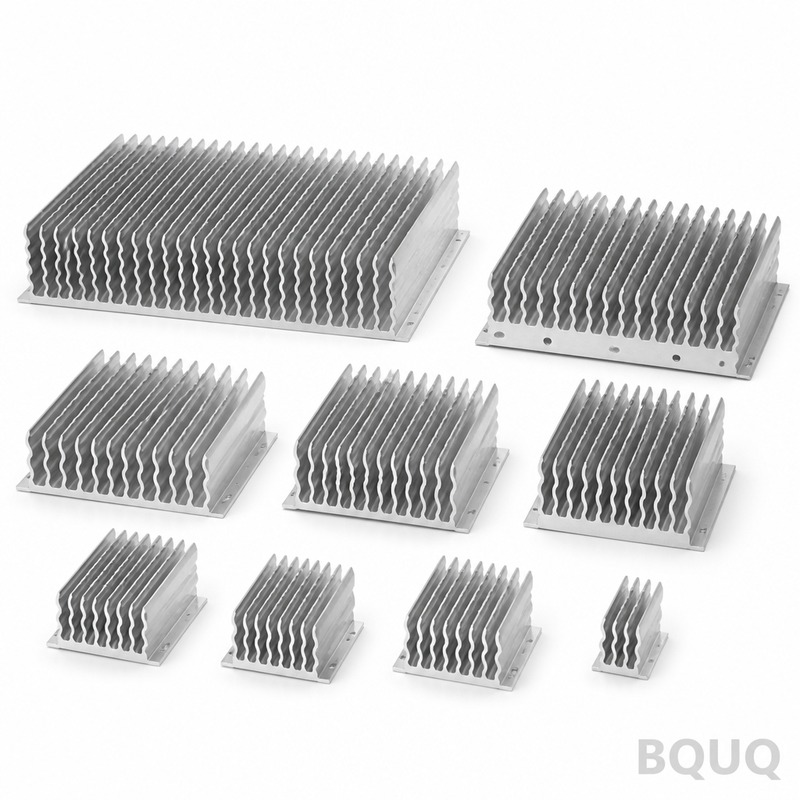
Tản Nhiệt Gia Công CNC: Khi Gia Công Vượt Trội Hơn Ép Đùn
Gia công CNC vượt trội hơn ép đùn khi số lượng thấp, đế cần độ chính xác thực sự, vật liệu là đồng, hoặc hình dạng không thể tạo bằng khuôn — các mẫu thử và loạt sản xuất ngắn dưới vài trăm chiếc, đế cần độ phẳng và các hốc, cánh tản nhiệt hướng tâm hoặc giao nhau, và các bộ phận dày hơn hoặc phức tạp hơn bất kỳ profile nào. Trên mức đó, nếu profile ép đùn tồn tại hoặc khuôn là hợp lý, ép đùn thắng về chi phí mỗi chi tiết; điểm giao nhau là câu hỏi về số lượng và hình dạng, không phải về chất lượng.
Tản nhiệt gia công bắt đầu từ một khối nhôm hoặc đồng đặc và các cánh tản nhiệt được cắt bỏ bằng dao phay ngón. Điều đó nghe có vẻ lãng phí — và đối với các hình dạng đơn giản với số lượng lớn thì đúng là vậy. Nhưng gia công mang lại ba điều mà ép đùn không thể bán rẻ: không cam kết chi phí khuôn mẫu, độ chính xác trên các bề mặt tiếp xúc với linh kiện, và sự tự do về hình dạng. Mỗi điều đó đáng giá thực sự cho đúng chi tiết.
Khi Nào Gia Công Là Lựa Chọn Đúng
Bốn tình huống chỉ ra việc gia công trước khi bắt đầu bất kỳ cuộc thảo luận nào về khuôn. Thứ nhất, số lượng thấp: không có khuôn ép đùn để khấu hao, một loạt 50 chiếc tản nhiệt gia công thường rẻ hơn chỉ riêng khuôn cho một profile tùy chỉnh. Thứ hai, độ chính xác: một đế phải phẳng để lớp vật liệu tiếp xúc nhiệt (TIM) mỏng hoạt động tốt, với các hốc lắp đặt và lỗ được định vị tương đối so với linh kiện — các đặc tính gia công giữ dung sai mà không bề mặt ép đùn nào có thể đạt được. Thứ ba, đồng: đồng ép đùn kém và hầu như luôn được gia công hoặc cạo (skived). Thứ tư, hình dạng: cánh tản nhiệt theo hai hướng, cánh hướng tâm quanh một hình trụ, cánh giao nhau hoặc dạng chân cắm (pin fins), đế bậc thang, và các kênh kín đều là lĩnh vực của gia công.
| Tình huống | Phương án ép đùn | Phương án gia công CNC |
|---|---|---|
| 100 chiếc, không có profile hiện có | Khuôn mới $1.000+ — không kinh tế | Không cần khuôn; gia công thắng |
| 1.000 chiếc, profile tiêu chuẩn có sẵn | Cắt theo chiều dài — rẻ nhất | Gia công thua về chi phí |
| 5.000 chiếc, profile tùy chỉnh | Khuôn khấu hao còn xu — thắng | Gia công chỉ cho đế phức tạp |
| Chi tiết đồng, mọi số lượng | Không thực tế | Gia công hoặc cạo (skiving) là tiêu chuẩn |
| Độ phẳng đế ≤ 0,1 mm + hốc | Vẫn cần gia công | Gia công trực tiếp |
Kết luận: cây quyết định ngắn gọn. Có profile hiện có hoặc số lượng thực sự lớn — hãy ép đùn. Ngược lại — hãy gia công. Và khi bề mặt tiếp xúc nhiệt yêu cầu một đế phẳng, có hốc, khoan chính xác, câu trả lời thường là lai ghép: phần cánh ép đùn với đế gia công, kết hợp cánh rẻ với độ chính xác gia công.
Hình Dạng Mà Ép Đùn Không Thể Tạo Ra
Ép đùn đẩy kim loại qua một mặt cắt cố định, nghĩa là mọi cánh tản nhiệt chạy suốt chiều dài theo một hướng. Gia công cắt bằng dao di chuyển theo ba trục, vì vậy cánh có thể chạy theo hai hướng (cắt chéo), tỏa ra từ một hình trụ, thon nhọn, bậc thang, hoặc dừng trước các cạnh. Cánh dạng chân cắm — mảng các chân vuông hoặc tròn nhỏ — là một đặc sản gia công vượt trội hơn cánh thẳng trong các thiết kế khí cưỡng bức nhỏ gọn vì không khí có thể chuyển hướng giữa các chân thay vì chảy theo rãnh.
| Hình dạng | Ép đùn | Gia công CNC |
|---|---|---|
| Cánh thẳng song song | Có | Có |
| Cánh giao nhau hoặc hai hướng | Không | Có |
| Cánh hướng tâm trên hình trụ | Không | Có |
| Mảng cánh dạng chân cắm | Không | Có |
| Cánh bậc thang hoặc thon nhọn | Hạn chế | Có |
| Cánh trên hai mặt đối diện | Không (hai khuôn) | Có, một lần gá đặt |
| Kênh kín hoặc khoang trong đế | Không | Có (hốc) |
Kết luận: nếu không gian thiết kế của bạn buộc cánh tản nhiệt theo nhiều hơn một hướng, quyết định quy trình đã được đưa ra — không khuôn nào có thể tạo ra nó, và gia công (hoặc liên kết các phần cánh riêng biệt) là con đường duy nhất. Đây là nơi tản nhiệt gia công không còn là sự thỏa hiệp mà trở thành công nghệ then chốt cho toàn bộ thiết kế nhiệt.
Độ Chính Xác Ở Nơi Đáng Giá
Bề mặt tiếp xúc nhiệt nằm trên đế, và đế là nơi tản nhiệt gia công biện minh cho giá của chúng. Một đế gia công có thể được giữ phẳng khoảng 0,05 mm hoặc tốt hơn trên 100 mm — chặt hơn một bậc độ lớn so với bề mặt ép đùn — cho phép một lớp mỡ mỏng hoặc vật liệu chuyển pha hoạt động hiệu quả thay vì bắc cầu qua các khe hở không khí. Các mẫu lỗ, lỗ khoét miệng (counterbore), và hốc được định vị tương đối so với chân linh kiện với dung sai gia công thông thường ±0,05 mm hoặc chặt hơn, do đó việc lắp ráp lặp lại được từ đơn vị này sang đơn vị khác.
| Đặc tính | Khả năng gia công điển hình | Tại sao quan trọng về nhiệt |
|---|---|---|
| Độ phẳng đế | ≤ 0,05 mm trên 100 mm | Lớp TIM mỏng, đều |
| Vị trí lỗ lắp đặt | ±0,05 mm | Áp lực kẹp lặp lại |
| Hốc và lỗ khoét miệng | ±0,05 mm | Linh kiện nằm gọn, phần cứng giữ chặt |
| Độ nhám bề mặt đế | Ra 0,8–1,6 µm điển hình | Điện trở tiếp xúc nhất quán |
| Độ dày cánh (phay) | ~0,8 mm trở lên | Mảng dày đặc không giới hạn khuôn |
Kết luận: mỗi 0,05 mm sai số hoặc gợn sóng độ phẳng đế trở thành khe hở không khí dưới linh kiện, và không khí là vật liệu tiếp xúc nhiệt tệ nhất trong tòa nhà. Đặc tả độ phẳng đế trên bản vẽ và trung tâm gia công sẽ đáp ứng; đặc tính tương tự trên chi tiết ép đùn là một nguyên công phay riêng biệt, vì vậy trả tiền một lần cho chi tiết gia công thường rẻ hơn trả tiền hai lần.
Thực Tế Chi Phí: Khi Gia Công Thắng Và Thua
Tản nhiệt gia công không có chi phí khuôn, khiến chúng không thể đánh bại ở số lượng thấp, nhưng chúng trả tiền theo từng milimét khối kim loại bị loại bỏ và từng phút thời gian trục chính. Một khối nhôm đơn giản 100 × 100 × 40 mm với cánh thẳng có thể gia công trong vài phút; một mảng cánh dạng chân cắm dày đặc bằng đồng có thể mất một giờ. Như một hướng dẫn lập kế hoạch, tản nhiệt nhôm gia công thường nằm trong dải chi phí mỗi chi tiết cao hơn so với ép đùn tương đương cho đến khi khuôn ép đùn được khấu hao — điểm giao nhau thường nằm ở đâu đó từ vài trăm đến vài nghìn chiếc tùy thuộc vào độ phức tạp của profile.
| Phương án | Khuôn mẫu | Xu hướng chi phí mỗi chi tiết | Phù hợp nhất |
|---|---|---|---|
| Ép đùn, profile có sẵn | Không | Thấp nhất ở mọi số lượng | Hình dạng tiêu chuẩn |
| Ép đùn, khuôn mới | $900–2.500 | Giảm nhanh sau ~500 m | Tùy chỉnh số lượng lớn |
| Gia công CNC, nhôm | Không | Ổn định, theo thời gian máy | Loạt ngắn, đế phức tạp |
| Gia công CNC, đồng | Không | Cao (vật liệu + thời gian) | Tản nhiệt cục bộ mật độ cao |
| Lai: cánh ép đùn + đế gia công | Khuôn + gia công | Trung bình | Bề mặt tiếp xúc chính xác ở số lượng lớn |
Kết luận: khi bản vẽ yêu cầu một đế phẳng, có hốc, nhiều đặc tính, hãy so sánh phương án lai với gia công toàn phần một cách trung thực — một profile ép đùn có sẵn với đế gia công có thể kết hợp cả cánh rẻ và độ chính xác gia công. Đối với bất cứ thứ gì dưới điểm giao nhau, hoặc bất kỳ chi tiết đồng nào, hoặc bất kỳ hình dạng hai hướng nào, gia công CNC toàn phần từ khối đặc là câu trả lời thực tế, và đó là phương án BQUQ thực hiện trên dây chuyền tản nhiệt gia công CNC — các trung tâm gia công trong cùng nhà máy Dongguan cũng cắt tản nhiệt ép đùn, do đó khuyến nghị quy trình tuân theo bản vẽ thay vì thiết bị có sẵn. Gửi tệp chi tiết kèm số lượng và yêu cầu nhiệt đến sc@bquq.com để được báo giá trong vòng 12 giờ làm việc; hướng dẫn các yếu tố chi phí tản nhiệt giải thích cách các lớp giá chồng lên nhau nếu bạn muốn xem phép tính trước.
Câu Hỏi Thường Gặp
Q: Khi nào tôi nên chọn tản nhiệt gia công CNC thay vì ép đùn?
A: Cho các mẫu thử và loạt sản xuất ngắn dưới vài trăm chiếc (không có chi phí khuôn), chi tiết đồng, đế cần độ phẳng dưới ~0,1 mm với hốc và lỗ chính xác, và bất kỳ hình dạng nào ép đùn không thể tạo ra — cánh giao nhau, hướng tâm, hoặc dạng chân cắm. Ở số lượng lớn với profile phù hợp, ép đùn thắng về giá.
Q: Gia công CNC giới hạn hình dạng cánh tản nhiệt đến mức nào?
A: Cánh gia công có thể mỏng hơn giới hạn ép đùn — khoảng 0,8 mm trở lên với dao tiêu chuẩn — và có thể chạy theo bất kỳ hướng nào dao có thể tiếp cận. Các rãnh hẹp sâu bị giới hạn bởi chiều dài và đường kính dao; một rãnh sâu hơn khoảng 10–15 lần chiều rộng cần dao đặc biệt hoặc EDM.
Q: Tản nhiệt gia công có tốt hơn về nhiệt so với ép đùn không?
A: Không tự động — hiệu suất đến từ diện tích cánh và luồng không khí, không phải từ cách cánh được tạo ra. Gia công thắng về nhiệt ở nơi nó cho phép hình dạng mà ép đùn không thể tạo (cánh chân cắm, cánh hai hướng) và nơi độ phẳng đế cải thiện bề mặt tiếp xúc giữa linh kiện và tản nhiệt.
Q: Tại sao tản nhiệt đồng thường được gia công thay vì ép đùn?
A: Đồng có tính ép đùn kém — lực ép cao, tuổi thọ khuôn ngắn, và kích thước profile bị giới hạn. Hầu hết tản nhiệt đồng được gia công từ tấm, cạo (skived), hoặc tạo hình từ tấm đồng, đó là lý do đồng xuất hiện chủ yếu ở nơi độ dẫn nhiệt của nó xứng đáng với chi phí.
Q: Tôi có thể kết hợp phần cánh ép đùn với đế gia công không?
A: Có, và đó thường là giá trị nhiệt thông minh nhất ở số lượng vừa phải: ép đùn tạo cánh rẻ, sau đó một nguyên công gia công làm phẳng đế, khoan lỗ, và cắt các hốc. Mối nối giữa hai phần là câu hỏi thiết kế — hàn đồng, keo epoxy, hoặc lắp ráp cơ khí mỗi loại có tổn thất nhiệt riêng.
Bài Viết Liên Quan
- heat-sink-cost-factors — Thêm từ chuỗi kỹ thuật Quản lý Nhiệt BQUQ.
- heat-sink-extrusion-design-guide — Thêm từ chuỗi kỹ thuật Quản lý Nhiệt BQUQ.
- heat-sink-selection-workflow — Thêm từ chuỗi kỹ thuật Quản lý Nhiệt BQUQ.
Tài Nguyên Liên Quan
- Về BQUQ: nhà máy nguồn chứng nhận ISO9001 tại Dongguan vận hành bốn dây chuyền sản xuất dưới một mái nhà.
- Tản nhiệt và chi tiết nhiệt: các tùy chọn ép đùn, gia công CNC và dập từ dây chuyền nhiệt — tản nhiệt ép đùn, tản nhiệt gia công CNC, tản nhiệt dập.
- Xu hướng ngành: phân tích sản xuất, thị trường vật liệu và tìm nguồn cung cho người mua.
- Bài viết kỹ thuật: hướng dẫn kỹ thuật và so sánh quy trình — thêm nơi bài viết này đến từ.
- Trung tâm FAQ: câu trả lời nhanh về CNC, dập, lò xo và tản nhiệt.
- Nghiên cứu điển hình: chi tiết thực và số liệu thực từ các dự án chúng tôi thiết kế và giao hàng.
- Liên hệ chúng tôi: gửi bản vẽ của bạn và nhận báo giá trong vòng 12 giờ làm việc.
Được biên soạn bởi Đội ngũ Kỹ thuật BQUQ. BQUQ là nhà máy nguồn chứng nhận ISO9001 tại Dongguan, Trung Quốc, vận hành các dây chuyền gia công CNC, dập kim loại, lò xo theo yêu cầu, tản nhiệt và collet dưới một mái nhà. Gửi bản vẽ đến sc@bquq.com hoặc WhatsApp +86 13713157787 để được báo giá trong vòng 12 giờ làm việc. www.bquq.com