Khớp hình dạng lỗ collet với phôi: tròn theo đường kính, lục giác, vuông và tam giác theo kích thước giữa hai mặt đối diện. BQUQ gia công lỗ định hình với dung sai cấp 0.005 mm, chứng nhận ISO9001.
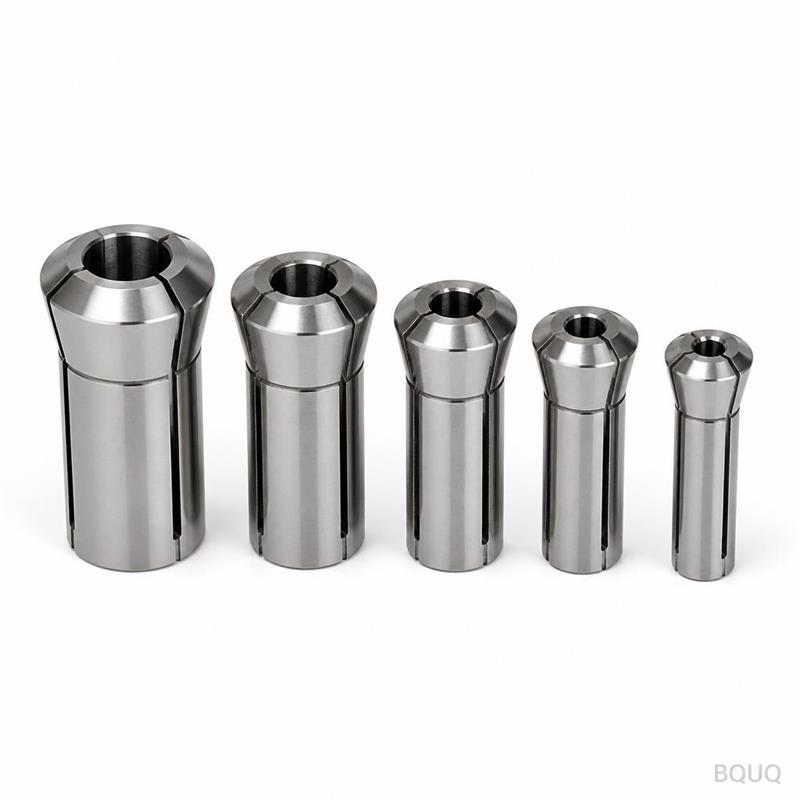
Collet lỗ tròn, lục giác và tam giác: Khớp hình dạng lỗ với phôi
Lỗ collet được cắt để khớp với mặt cắt ngang của phôi: tròn cho phôi tròn, lục giác theo kích thước giữa hai mặt đối diện cho phôi lục giác, vuông theo kích thước giữa hai mặt đối diện cho phôi vuông, và tam giác theo kích thước giữa hai mặt đối diện cho phôi tam giác. Lỗ tròn không thể giữ phôi lục giác thẳng, và lỗ lục giác được định cỡ theo khoảng cách góc sẽ không bao giờ chạm vào các mặt phẳng — hình dạng lỗ và kích thước tham chiếu của nó phải sao chép theo phôi.
Hầu hết phôi thanh là tròn, đó là lý do tại sao collet lỗ tròn chiếm ưu thế trong các danh mục. Nhưng máy tiện tự động thường chạy phôi lục giác và vuông để sản xuất đầu nối, ốc vít và phụ kiện mà không cần bước phay thứ cấp, và phôi tam giác xuất hiện trong các công việc dây và biên dạng chuyên dụng. Mỗi hình dạng thay đổi hình học lỗ, cách bố trí rãnh và kích thước tham chiếu mà bạn đặt hàng. Nắm đúng ba yếu tố này, collet lỗ định hình sẽ kẹp chắc chắn như collet tròn.
Tại sao hình dạng lỗ phải sao chép hình dạng phôi
Collet kẹp thông qua tiếp xúc bề mặt và ma sát. Phôi tròn có bề mặt liên tục, do đó lỗ tròn phân bổ lực kẹp quanh toàn bộ chu vi. Phôi lục giác có sáu mặt phẳng; lỗ tròn sẽ chỉ chạm vào các góc — ba đường tiếp xúc hẹp không thể truyền mô-men xoắn mà không làm nát các cạnh hoặc để thanh xoay.
Do đó, lỗ trở thành mặt cắt ngang của phôi, bù thêm một khe hở làm việc nhỏ. Nhà sản xuất collet cắt biên dạng trong phôi đã tôi cứng, sau đó mài hoặc cắt dây để các bề mặt kẹp chính xác. Rãnh được bố trí xung quanh biên dạng để các ngón kẹp đóng theo hướng kính mà không làm sập các góc.
| Hình dạng phôi | Kích thước tham chiếu lỗ | Bề mặt tiếp xúc | Cách bố trí rãnh điển hình |
|---|---|---|---|
| Tròn | Đường kính | Toàn bộ chu vi | 3 rãnh |
| Lục giác | Kích thước giữa hai mặt đối diện (AF) | 6 mặt phẳng | 3 rãnh, các góc nằm trong vùng đỡ |
| Vuông | Kích thước giữa hai mặt đối diện (AF) | 4 mặt phẳng | 4 rãnh điển hình |
| Tam giác | Kích thước giữa hai mặt đối diện (AF) | 3 mặt phẳng | 3 rãnh, thẳng hàng với góc |
Điểm mấu chốt nằm ở cột thứ hai: mọi lỗ không tròn được đặt hàng theo kích thước giữa hai mặt đối diện, khoảng cách giữa các cạnh song song — không bao giờ theo đường kính từ góc này sang góc đối diện (đường kính vòng tròn ngoại tiếp). Kích thước giữa hai mặt đối diện là những gì bản vẽ phôi thể hiện, những gì thước panme kiểm tra, và những gì lỗ collet phải tái tạo.
Collet lỗ lục giác: Loại lỗ định hình phổ biến nhất
Collet lục giác giữ phôi lục giác cho các chi tiết cần gia công tính năng lục giác, chuốt hoặc chỉ cần giữ cứng vững trong khi đầu kia được tiện. Chúng là tiêu chuẩn trong sản xuất đầu nối, phụ kiện và ốc vít, và được đặt hàng liên tục cho các dòng máy tiện tự động (36, 46, 52, 60, 630, 643).
Chi tiết quan trọng là kích thước giữa hai mặt đối diện. Phôi lục giác được đặc tả theo AF, ví dụ 8 mm AF hoặc 5/16 in AF (7,94 mm). Đặt hàng collet theo con số đó. Lỗ sau đó được cắt thành hình lục giác với AF đó có khe hở làm việc, và collet kẹp trên cả sáu mặt phẳng.
Vị trí rãnh rất quan trọng trên collet lục giác. Các ngón kẹp phải đóng theo hướng kính, nhưng một rãnh thẳng hàng với góc lục giác sẽ khiến góc đó không được đỡ hoặc buộc các ngón kẹp uốn cong quanh nó. Thiết kế collet lục giác tốt đặt ba rãnh sao cho mỗi ngón kẹp mang một mặt phẳng hoàn chỉnh hoặc một góc giữa các điểm đỡ, giữ tâm lục giác khi đóng. Đó là chi tiết gia công, không phải tiếp thị: pha rãnh sai thể hiện qua việc phôi bị nhấc lên ở một mặt phẳng và độ đảo thấy rõ trên chi tiết tiện.
Lỗ vuông và tam giác: Ngách nhưng có thật
Collet lỗ vuông phục vụ phôi vuông cho các chi tiết như trục chuốt, chuôi vuông và phôi dụng cụ. Định cỡ lại theo kích thước giữa hai mặt đối diện, và rãnh thường được bố trí bốn hướng để mỗi mặt được một ngón kẹp đỡ. Góc vuông sắc hơn góc lục giác, do đó khe hở tại bán kính góc quan trọng: các góc lỗ phải tránh bán kính góc của phôi nếu không collet sẽ không đóng hoàn toàn.
Collet lỗ tam giác là chuyên gia của nhóm, được sử dụng khi phôi có mặt cắt ngang hình tam giác — một số biên dạng dây, ốc vít đặc biệt và linh kiện khóa. Lỗ là tam giác đều được định cỡ theo kích thước giữa hai mặt đối diện, với ba rãnh pha theo các mặt. Phôi tam giác hiếm khi được vẽ với dung sai chặt, vì vậy hãy kiểm tra cấp phôi trước khi đặt hàng; phôi tam giác lỏng trong lỗ chặt sẽ không ngồi đúng.
| Hình dạng lỗ | Nguồn phôi điển hình | Các chi tiết thường được sản xuất |
|---|---|---|
| Tròn | Thanh tròn kéo, mài | Trục, chốt, phôi tiện |
| Lục giác | Thanh lục giác kéo, lục giác dập nguội | Đầu nối, phụ kiện, phôi đầu lục giác |
| Vuông | Thanh vuông kéo | Phôi chuốt, chuôi vuông |
| Tam giác | Biên dạng kéo chuyên dụng | Phần cứng khóa, chi tiết dây đặc biệt |
Nếu hình dạng phôi của bạn không có trong bảng tiêu chuẩn, lỗ là một đường cắt tùy chỉnh — biên dạng tuân theo bản vẽ phôi của bạn một cách chính xác, và các quy tắc AF tương tự được áp dụng.
Quy tắc đặt hàng ngăn ngừa collet kém chất lượng
Ba lỗi đặt hàng gây ra gần như mọi sự không khớp lỗ định hình. Đầu tiên, đưa ra kích thước tham chiếu sai: collet lục giác được báo giá theo đường kính từ góc này sang góc đối diện thay vì AF sẽ quá khổ khoảng 15% và không bao giờ chạm vào các mặt phẳng. Thứ hai, trộn lẫn đơn vị: phôi lục giác 8 mm AF và 5/16 in (7,94 mm) AF là các lỗ khác nhau — chuyển đổi chính xác. Thứ ba, giả định một lỗ bao phủ một dải dung sai: như với collet tròn, lỗ định hình chỉ có vài phần trăm milimét đóng, do đó cấp phôi phải nhất quán.
Bao gồm bán kính góc trên bản vẽ phôi nếu nó đáng kể. Trên phôi lục giác và vuông, các góc kéo không bao giờ sắc; lỗ không có khe hở góc sẽ kẹt trước khi các mặt phẳng tiếp xúc. Một nhà cung cấp tốt sẽ yêu cầu biên dạng phôi hoặc mẫu khi hình học góc bất thường.
Cũng nêu rõ phôi được làm bằng vật liệu gì. Phôi đã tôi cứng hoặc biến cứng nguội (thép không gỉ, một số hợp kim) chống lại các ngón kẹp khác với đồng thau mềm hoặc nhôm, và chiều rộng rãnh cùng khe hở lỗ có thể được điều chỉnh để kẹp chắc chắn mà không làm xước bề mặt. Phôi mềm trong lỗ được cắt cho phôi cứng sẽ có dấu vết tại các cạnh rãnh.
Nhà máy cần gì từ bạn
Một yêu cầu báo giá lỗ định hình hoàn chỉnh là: dòng collet (số loại), tham chiếu máy và mâm cặp, hình dạng và vật liệu phôi, kích thước chính xác giữa hai mặt đối diện hoặc đường kính kèm đơn vị, cấp dung sai phôi, và cấp độ đảo yêu cầu trên chi tiết hoàn thiện.
Đây là bộ đặc tính kỹ thuật mà BQUQ gia công hàng ngày cho các dòng 36/46/52/60/630/643. Biên dạng lỗ được cắt trong phôi đã tôi cứng và hoàn thiện bằng mài chính xác trên cùng dây chuyền duy trì ±0.005 mm trong toàn bộ sản xuất CNC của chúng tôi, dưới sự kiểm soát ISO9001 — bao gồm cả lỗ định hình, vì lỗ lục giác hoặc tam giác được giữ cùng kỷ luật hình học như lỗ tròn. Xem qua dải sản phẩm collet máy tiện tự động, xem ví dụ thực tế trong collet lỗ lục giác loại 52 gia công CNC của chúng tôi, và khi kích thước của bạn nằm ngoài thang tiêu chuẩn, hướng dẫn thiết kế collet tùy chỉnh của chúng tôi liệt kê các chi tiết bản vẽ giúp báo giá lỗ định hình nhanh chóng. Các mâm cặp mà các dòng này lắp vào đến từ cùng dây chuyền — xem mâm cặp collet kiểu Thụy Sĩ và 2J. Gửi đặc tính phôi đến sc@bquq.com và báo giá sẽ được gửi lại trong vòng 12 giờ làm việc.
Câu hỏi thường gặp
Q: Collet lỗ tròn có thể giữ phôi lục giác không?
A: Kém. Tiếp xúc chỉ xảy ra tại ba góc nhọn, không thể truyền mô-men xoắn mà không làm biến dạng phôi. Sử dụng collet lỗ lục giác được định cỡ theo kích thước giữa hai mặt đối diện; lực kẹp sau đó bao phủ cả sáu mặt.
Q: Tôi nên đặt hàng kích thước nào cho collet lục giác?
A: Kích thước giữa hai mặt đối diện của phôi lục giác, tính bằng milimét hoặc inch, chính xác như bản vẽ phôi thể hiện. Không bao giờ đặt hàng theo đường kính từ góc này sang góc đối diện — lỗ đó sẽ quá khổ khoảng 15% và sẽ không kẹp được.
Q: Collet lỗ định hình có cần số lượng rãnh khác nhau không?
A: Thường là có. Collet lục giác thường sử dụng ba rãnh pha theo các góc; collet vuông thường sử dụng bốn. Pha rãnh giữ cho các mặt phẳng được đỡ khi các ngón kẹp đóng, điều mà collet tròn không cần xem xét.
Q: Tại sao collet lục giác của tôi làm xước phôi tại các cạnh rãnh?
A: Hoặc khe hở góc quá nhỏ, khiến các góc kẹt trước khi các mặt phẳng ngồi vào, hoặc phôi cứng hơn so với lỗ được thiết lập. Gửi biên dạng và vật liệu phôi để khe hở lỗ và các cạnh rãnh có thể được khớp.
Q: Phôi lỗ tam giác có đủ phổ biến để trở thành tiêu chuẩn không?
A: Đây là một sản phẩm chuyên dụng. Phôi tam giác đến từ các biên dạng kéo ngách, do đó hầu hết collet lỗ tam giác là đơn hàng tùy chỉnh được định cỡ theo kích thước giữa hai mặt đối diện với khe hở góc. Xác nhận cấp phôi và bán kính góc trước khi báo giá.
Được biên soạn bởi Đội ngũ Kỹ thuật BQUQ. BQUQ là nhà máy nguồn chứng nhận ISO9001 tại Dongguan, Trung Quốc, vận hành các dây chuyền gia công CNC, dập kim loại, lò xo tùy chỉnh, tản nhiệt và collet dưới một mái nhà. Gửi bản vẽ đến sc@bquq.com hoặc WhatsApp +86 13713157787 để nhận báo giá trong vòng 12 giờ làm việc. www.bquq.com