So sánh các tiêu chuẩn đầu kẹp dao BT, CAT, HSK và DIN 6499: côn, tiếp xúc kép, bulong kéo và lắp trục chính. BQUQ gia công đầu kẹp dao.
BT vs CAT vs HSK vs DIN 6499: Tiêu chuẩn đầu kẹp dao cho máy phay CNC
BT, CAT và HSK là các tiêu chuẩn kết nối đầu kẹp dao với trục chính CNC, trong khi DIN 6499 quy định phần đầu kẹp ống kẹp giữ dao cụ — và việc nhầm lẫn giữa hai lớp này là lý do khiến người mua đặt hàng những đầu kẹp không vừa. BT và CAT là côn 7:24 từ các tổ chức tiêu chuẩn khác nhau, HSK là côn rỗng 1:10 với tiếp xúc kép, và DIN 6499 (ISO 15488) chỉ đơn giản là thông số kỹ thuật của ống kẹp ER nằm bên trong tất cả các loại trên.
Câu hỏi về tiêu chuẩn đầu kẹp dao có hai lớp, và hầu hết sự nhầm lẫn đến từ việc trộn lẫn chúng. Lớp một: giao diện trục chính — phần côn hoặc chuôi rỗng định vị đầu kẹp trong máy. BT, CAT và HSK nằm ở lớp này. Lớp hai: đầu kẹp — ổ cắm giữ dao cụ cắt thực tế, thường là ổ cắm ống kẹp ER được xác định bởi DIN 6499. Một đầu kẹp BT40 với ổ cắm ER32 là một câu có chủ ngữ từ một họ tiêu chuẩn và tân ngữ từ một họ khác. Hướng dẫn này giữ các lớp riêng biệt và ánh xạ các họ.
Họ côn dốc 7:24: BT, CAT và SK
Côn dốc là giao diện trục chính lâu đời nhất còn tồn tại: một hình nón 7:24 (góc khoảng 16,6 độ) tự khóa bằng cách nêm vào trục chính, được giữ bởi thanh kéo kéo một bulong kéo hoặc núm giữ. Bản thân côn gần như giống hệt nhau giữa BT, CAT và SK — sự khác biệt nằm ở mặt bích, bulong kéo và đo kiểm. BT tuân theo MAS 403 và thống trị các máy được sản xuất tại châu Á; CAT tuân theo ASME B5.50 và thống trị Bắc Mỹ; SK (DIN 69871) là thành viên châu Âu của họ này.
| Thuộc tính | BT (MAS 403) | CAT (ASME B5.50) | SK (DIN 69871) |
|---|---|---|---|
| Côn | 7:24 | 7:24 | 7:24 |
| Mặt bích | Lớn hơn, có biến thể tiếp xúc kép | Mặt bích chữ V, có rãnh giữ | Tương tự CAT, bố trí DIN |
| Bulong kéo | Bulong đặc thù BT | Bulong đặc thù CAT | Bulong DIN 69872 |
| Khu vực | Châu Á, đặc thù Nhật Bản | Bắc Mỹ | Châu Âu |
| Có thể thay thế? | Không — mặt bích và bulong khác | Không — mặt bích và bulong khác | Không — mặt bích và bulong khác |
Thông điệp rõ ràng nhất của bảng là hàng cuối cùng: chúng trông giống nhau nhưng không thể thay thế cho nhau. Một đầu kẹp CAT40 lắp vào trục chính BT40 sẽ nằm trên sai đường đo hoặc không nằm được, và việc ép nó sẽ làm hỏng côn trục chính. Khớp đầu kẹp với tiêu chuẩn đã nêu của máy, và khớp bulong kéo với thông số kỹ thuật riêng của đầu kẹp — bulong cũng không phổ quát.
HSK: Họ chuôi rỗng
HSK (DIN 69893) thay thế côn đặc bằng một côn rỗng, ngắn 1:10 tiếp xúc cả với côn và mặt mặt bích — "tiếp xúc kép." Khi thanh kéo kéo đầu kẹp vào, chuôi rỗng hơi uốn cong và cả hai bề mặt đều nằm vào, tạo ra kết nối ngắn hơn, cứng hơn với độ lặp lại tốt hơn ở tốc độ cao. Kích thước HSK là đường kính mặt bích tính bằng milimét: HSK-63, HSK-80, HSK-100. Các chữ cái sau số là biến thể, và chúng quan trọng:
| Biến thể HSK | Dạng | Sử dụng điển hình |
|---|---|---|
| HSK-A | Tự động thay dao với rãnh truyền động và cổng dung dịch làm mát | Trung tâm gia công đa năng |
| HSK-B | Chịu tải nặng, mặt bích lớn, dung dịch làm mát xuyên qua | Máy lớn hơn, cắt nặng |
| HSK-E | Nhẹ, đối xứng, khối lượng tối thiểu | Tốc độ cao, mô-men xoắn thấp |
| HSK-F | Rất nhẹ, tốc độ cao | Trục chính siêu tốc độ cao |
| HSK-T | Giao diện tiện | Trục chính máy tiện và tiện-phay |
Tiếp xúc kép là lợi thế xác định của HSK: vì mặt bích nằm vào mặt trục chính, vị trí trục lặp lại chính xác hơn so với đầu kẹp chỉ có côn, và kết nối ngắn cứng chống uốn tốt hơn ở cùng độ nhô. Chi phí là mũi trục chính đắt hơn và đầu kẹp phải được giữ sạch — một vết ba via trên mặt bích sẽ phá hỏng toàn bộ thiết kế.
DIN 6499: Đầu kẹp ống kẹp thực hiện việc giữ dao
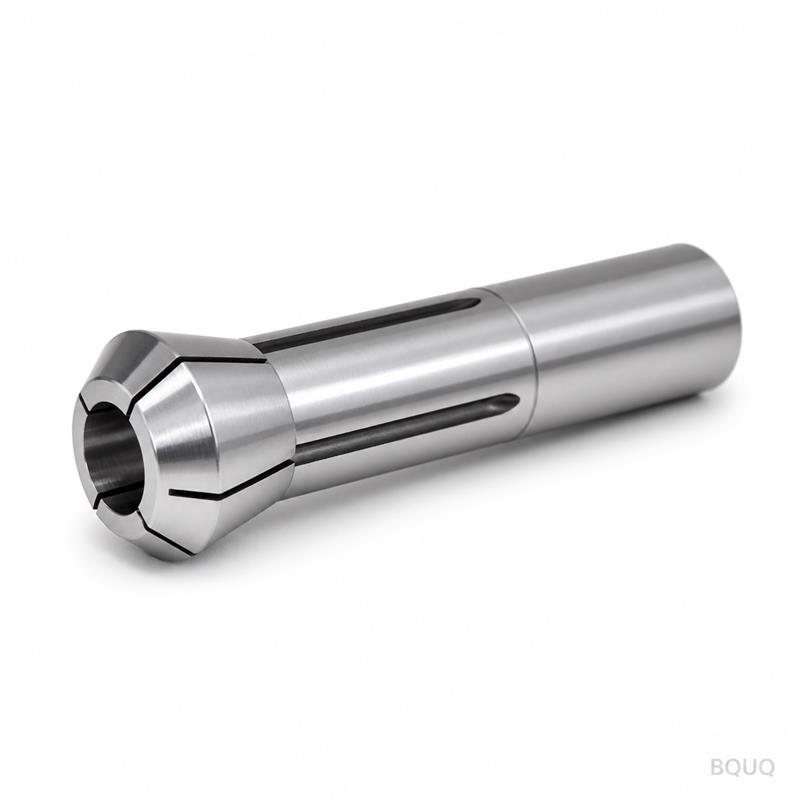
DIN 6499 — nay là ISO 15488 — là thông số kỹ thuật ống kẹp ER: côn 8 độ, kích thước ống kẹp từ ER8 đến ER50, các mẫu rãnh và phương pháp thử nghiệm. Nó hoàn toàn không phải là giao diện trục chính. Nó là tiêu chuẩn làm cho ổ cắm ER32 giống nhau trên đầu kẹp BT40, đầu kẹp CAT40 và đầu kẹp HSK-63A, đó là lý do tại sao đầu kẹp dao hiếm khi gây ra vấn đề tương thích trong khi đầu trục chính thường xuyên gây ra. Thang kích thước đầy đủ và hệ thống cấp độ được đề cập trong hướng dẫn hệ thống ống kẹp ER của chúng tôi; điểm chính ở đây là quy ước đặt tên trên bất kỳ đầu kẹp nào: BT40-ER32 nghĩa là tiêu chuẩn trục chính BT, cỡ 40, với ổ cắm ống kẹp ER32.
| Tiêu chuẩn trục chính | Tiêu chuẩn đầu kẹp ống kẹp | Ví dụ đầu kẹp phay điển hình |
|---|---|---|
| BT (MAS 403) | DIN 6499 (ER) | BT40-ER32 |
| CAT (ASME B5.50) | DIN 6499 (ER) | CAT40-ER32 |
| SK (DIN 69871) | DIN 6499 (ER) | SK40-ER32 |
| HSK (DIN 69893) | DIN 6499 (ER) | HSK-63A-ER32 |
Ngoài ER, các đầu kẹp tương tự có thể mang các hệ thống đầu dao khác — ống kẹp TG, lỗ co ngót, đầu kẹp thủy lực, hoặc đầu kẹp ống kẹp dao phay ngón trực tiếp — nhưng ER là mặc định mà hầu hết các xưởng tiêu chuẩn hóa.
Lựa chọn: Khớp trục chính, sau đó khớp nguyên công
Logic lựa chọn ngắn gọn. Giao diện trục chính được quyết định bởi máy: đọc thông số kỹ thuật mũi trục chính và mua tiêu chuẩn và kích thước đó — việc trang bị thêm không đáng giá. Đầu kẹp ống kẹp được quyết định bởi nguyên công: ER cho phay và khoan đa năng, với kích thước được chọn sao cho chuôi lớn nhất của bạn nằm ở giữa dải của hệ thống, và cấp độ cân bằng được chọn cho tốc độ tối đa (xem hướng dẫn cân bằng đầu kẹp ống kẹp của chúng tôi). Kiểu đầu kẹp — đầu kẹp ống kẹp so với co ngót so với thủy lực — là quyết định cuối cùng, cân nhắc giữa tính linh hoạt, độ đảo và chi phí. Đầu kẹp ống kẹp thắng về tính linh hoạt; các đánh đổi sâu hơn được đề cập trong hướng dẫn đầu kẹp ống kẹp dao của chúng tôi.
Một quy tắc mua hàng áp dụng cho tất cả các tiêu chuẩn: kiểm tra trước khi tin tưởng. Làm sạch côn, lắp đầu kẹp, chỉ thị đồng hồ so trên đường đo hoặc bề mặt lắp, và kiểm tra độ đảo bằng thanh kiểm tra. Một đầu kẹp có tiêu chuẩn đúng nhưng gia công cẩu thả sẽ hỏng giống hệt như đầu kẹp sai tiêu chuẩn — chỉ chậm hơn. Khi bạn cần đầu kẹp được gia công theo hình học mà các tiêu chuẩn giả định — côn thật, ổ cắm đồng tâm, bề mặt lắp sạch — BQUQ gia công đầu kẹp ống kẹp dao đến cấp chính xác 0,005 mm trên thiết bị CNC dưới mái nhà ISO9001 tại Dongguan, cùng với các dây chuyền mâm cặp công suất Thụy Sĩ. Gửi tiêu chuẩn trục chính, kích thước và danh sách dao cụ của bạn đến sc@bquq.com để nhận báo giá trong vòng 12 giờ làm việc.
Câu hỏi thường gặp
Q: Đầu kẹp dao BT và CAT có thể thay thế cho nhau không?
A: Không. Cả hai đều sử dụng côn 7:24, nhưng BT (MAS 403) và CAT (ASME B5.50) khác nhau về thiết kế mặt bích, bulong kéo và đo kiểm. Lắp sai loại sẽ làm hỏng côn trục chính. Luôn khớp đầu kẹp với tiêu chuẩn đã nêu của máy.
Q: Ưu điểm của HSK so với đầu kẹp côn dốc là gì?
A: Côn rỗng 1:10 của HSK nằm trên cả côn và mặt bích (tiếp xúc kép), tạo ra kết nối ngắn hơn, cứng hơn với vị trí trục lặp lại tốt hơn — có giá trị ở tốc độ cao và độ nhô dài. Chi phí là trục chính đắt hơn và yêu cầu vệ sinh nghiêm ngặt.
Q: DIN 6499 có liên quan gì đến BT và CAT?
A: DIN 6499 (ISO 15488) là tiêu chuẩn ống kẹp ER cho đầu kẹp dao của đầu kẹp. BT, CAT và HSK mô tả đầu trục chính. Một đầu kẹp là sự kết hợp — ví dụ BT40-ER32 — và hai lớp tuân theo các tiêu chuẩn khác nhau.
Q: Làm sao tôi biết máy của mình cần tiêu chuẩn đầu kẹp nào?
A: Đọc thông số kỹ thuật mũi trục chính từ nhà sản xuất máy — nó nêu rõ tiêu chuẩn, kích thước và bulong kéo. Khi nghi ngờ, hãy hỏi nhà cung cấp máy trước khi mua bất kỳ đầu kẹp nào; côn trục chính là thứ bạn không thể điều chỉnh một cách rẻ tiền.
Q: Tôi có thể sử dụng ống kẹp ER với đầu kẹp HSK không?
A: Có — ER là tiêu chuẩn đầu ống kẹp phù hợp với bất kỳ giao diện trục chính nào. Đầu kẹp HSK thường được chế tạo với ổ cắm ER, và cùng một ống kẹp ER hoạt động trên các đầu kẹp BT, CAT, SK và HSK có cùng kích thước ổ cắm.
Được viết bởi Đội ngũ Kỹ thuật BQUQ. BQUQ là nhà máy nguồn được chứng nhận ISO9001 tại Dongguan, Trung Quốc, vận hành các dây chuyền gia công CNC, dập kim loại, lò xo theo yêu cầu, tản nhiệt và ống kẹp dưới một mái nhà. Gửi bản vẽ đến sc@bquq.com hoặc WhatsApp +86 13713157787 để nhận báo giá trong vòng 12 giờ làm việc. www.bquq.com